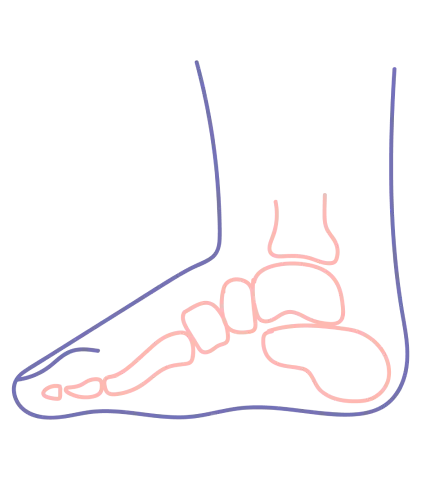
How to choose the best shoes
Fit and functionality are more important than fashion
Dr. Nicolosi, an ankle surgeon, offers five tips to help you choose the best shoes:
1. Get your child's footsteps
Measurements should be taken at a shoe store rather than at home, as there are professional equipment in the store to help you find the correct length and width of your child's foot. Measurements taken while the child is standing will be more accurate.
2. Don't buy shoes that are too big
One of the most common problems Dr. NIcolosi sees is that parents buy their children shoes that are too big. This is very worrying for infants and toddlers who are just learning to walk, which can cause them to stagger when they walk. Parents buy larger shoes thinking that their children will grow up and wear larger shoes longer. But the reality is that a half-size or full-size larger shoe can make children more likely to trip and fall, which can lead to injuries.
3. Check the toes frequently
Having enough width and depth in the forefoot of the shoe helps prevent overcrowding and pressure on the toes. Make sure the forefoot of the child can move easily inside the shoe and that the toes have room to move without being squeezed. There is 1-2 cm of space in front of the longest toe, or the width of the big toe. This space is not recommended to be larger than 3 cm or smaller than 1 cm.
Cleveland Clinic, a top hospital in the United States with a century-old history
4. Choose supportive shoes
Children are usually energetic and like sports and other physical activities. So it is best to choose closed-toe sneakers with arch support, Dr. Nicolosi said. Rubber soles are very suitable for children, which should increase their anti-slip properties and help reduce the risk of falls. Hard soles can provide better support, while shoes that you can bend back and forth freely (soft-soled shoes) provide little support and control for foot movement. The American Orthopaedic Foot and Ankle Association also recommends buying shoes made of breathable materials such as leather, canvas or mesh. Children's feet tend to sweat more than adults' feet. These materials can help air flow.
5. If the shoe doesn't fit, throw it away
During the growth stage of children, we need to check and replace children's shoes frequently, every 3-4 months. During this time, children's feet often grow by about half a size, and they need to be given enough space for their feet to develop. Take the time to go to the store to get measured and tried on, and choose good supportive shoes to help your child gain lifelong benefits.